Protecting a residential property requires an exact, methodical pest control service in San Diego designed to intercept wood-destroying insects, nuisance colonial ants, and disease-bearing rodents directly at the building perimeter. The coastal marine layer in Pacific Beach and Point Loma combines with the dry chaparral brush lines of Mira Mesa and Rancho Bernardo to create severe regional infestation vectors that standard consumer spray treatments cannot resolve.
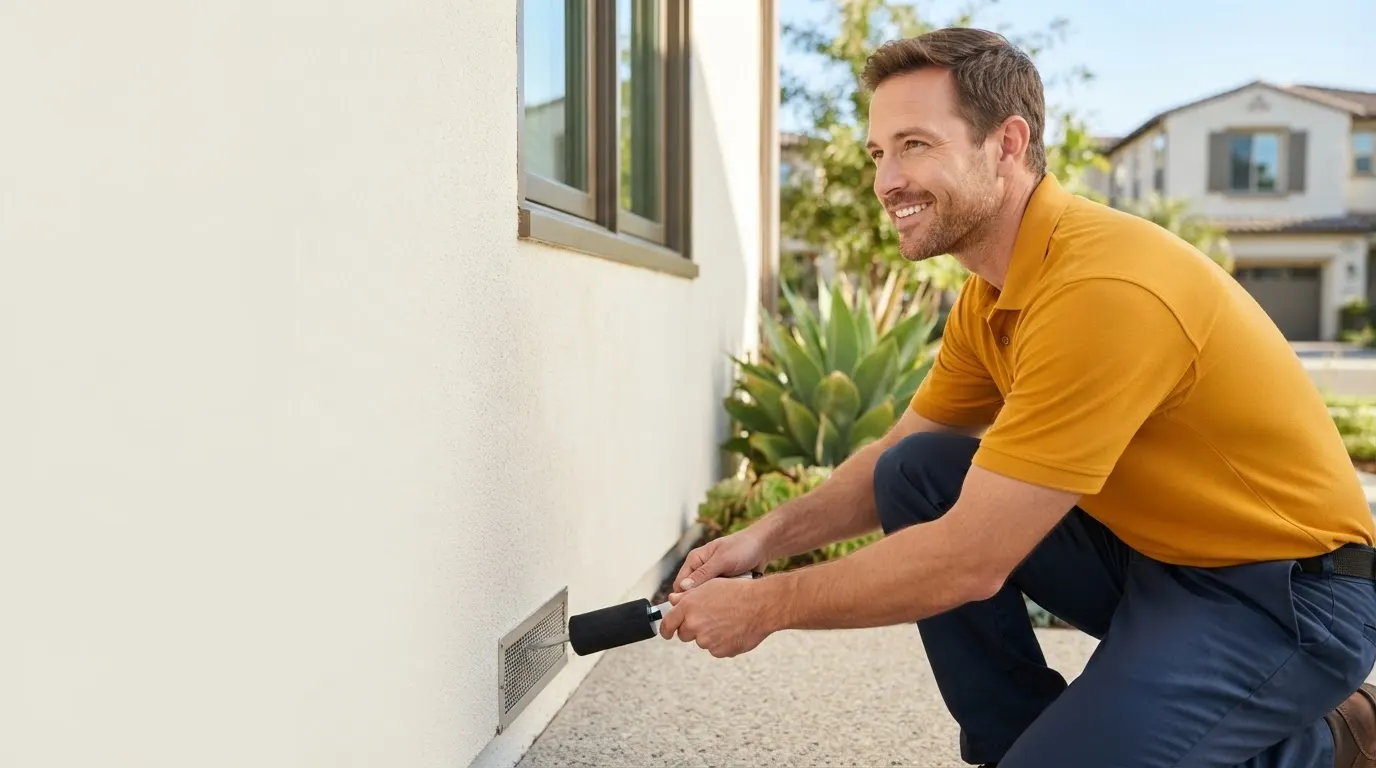
A professional pest control service in San Diego is an engineering-grade structural remediation and perimeter defense process designed to locate, eradicate, and mechanically block wood-destroying organisms, invasive insects, and health-threatening vermin from coastal and inland residential properties.
Every service reflects the same meticulous attention to detail, whether it's a single job or a larger pest control service project across San Diego.
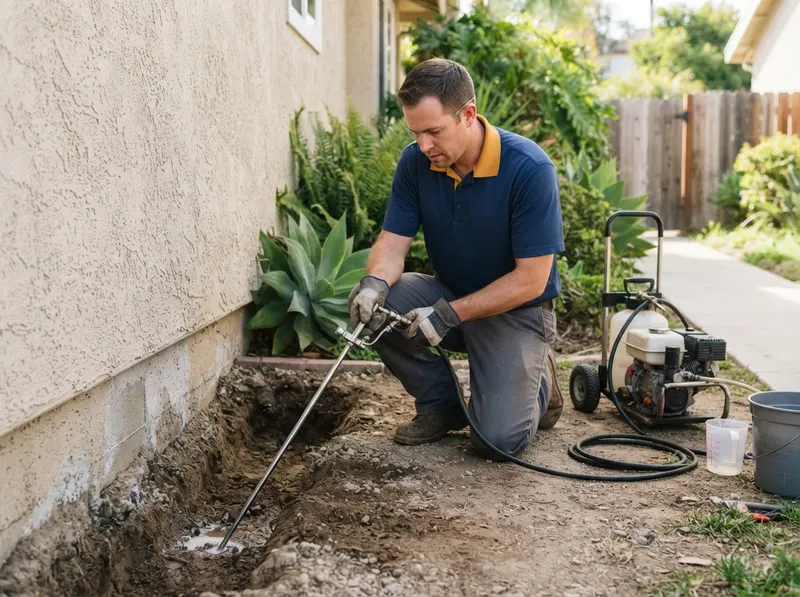
Subterranean termite defense applies high-volume, non-repellent liquid termiticides into deep continuous soil trenches and precision-drilled concrete access points around structural slab perimeters and stem walls. This chemical defense zone intercepts subterranean workers traveling through subterranean mud shelter tubes before they reach untreated structural sill plates, wood subfloors, and internal drywall framing. Non-repellent active ingredients such as fipronil bind tightly to sandy loam and clay soils throughout San Diego County, transferring lethal doses from termite to termite via daily social grooming. This structural treatment arrests hidden feeding activity inside load-bearing supports and eliminates colonies concealed under concrete pads without disruptive structural alterations.
Get a quote →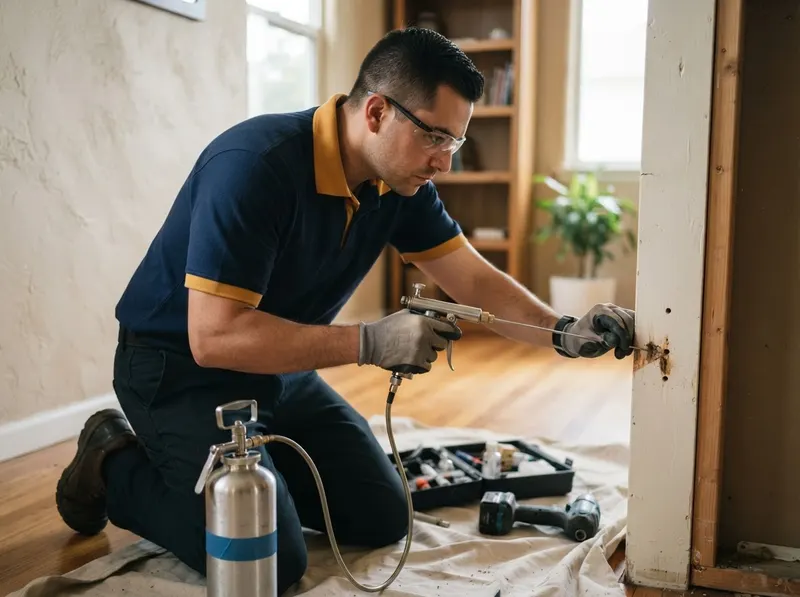
Localized drywood termite remediation targets active timber galleries using acoustic boundary probes, thermal imaging sensors, and optical fiber borescopes, followed by direct low-pressure borate foam or termiticide liquid injection. Technicians isolate structural termite activity inside exposed exterior rafter tails, fascia boards, structural framing studs, and window casing assemblies, delivering concentrated active ingredients directly into structural galleries. The expanding chemical foam penetrates cellular wood structures to eradicate living drywood nymphs, soldiers, and reproductives while leaving protective mineral residues that halt future structural re-infestation, providing an efficient alternative to whole-structure fumigation for isolated infestations.
Get a quote →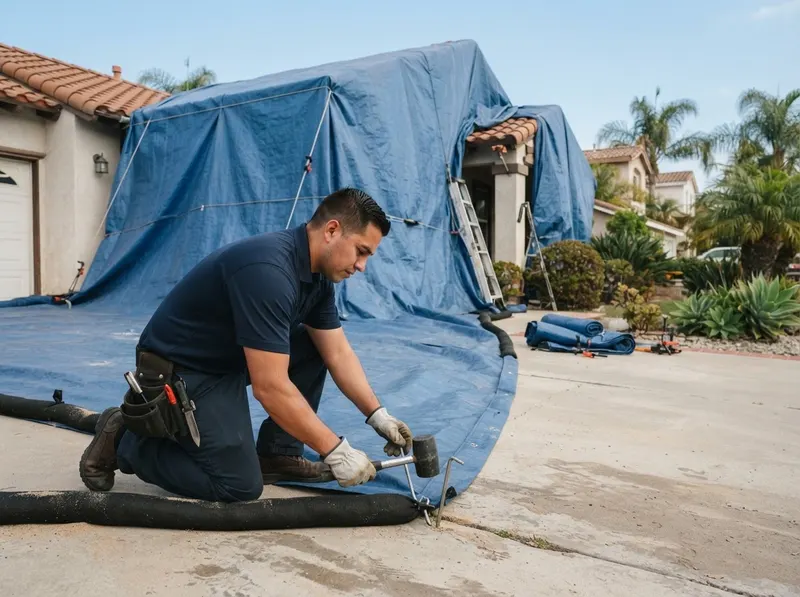
Whole-structure fumigation provides total chemical saturation across large-footprint single-family residences, multi-story buildings, and historical properties where drywood termite galleries span multiple inaccessible framing cavities. Crews enclose the entire building envelope under heavy gas-impervious vinyl tarps, securing foundation perimeters with continuous sand snakes before introducing sulfuryl fluoride gas. The fumigant diffuses uniformly through drywall, subflooring, finished insulation, and dense hardwood beams, eradicating deep-seated drywood termite colonies, wood-boring beetles, and carpenter ants at every life stage. Once the required exposure period concludes, professional aeration blowers vent the building until calibrated clearance monitors confirm zero residual gas presence.
Get a quote →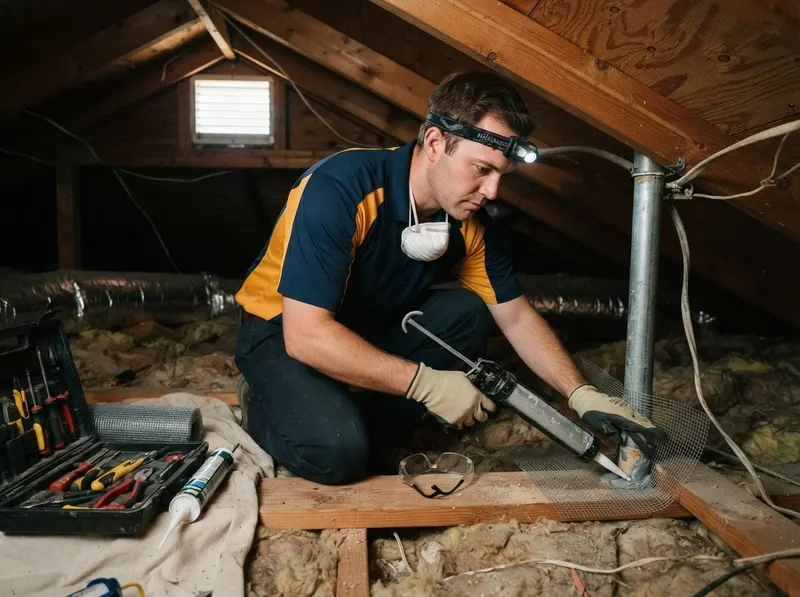
Attic rodent remediation integrates comprehensive structural exclusion using rigid 23-gauge galvanized steel hardware cloth to close vulnerable architectural openings, including attic gable louvers, dormer roof intersections, eave gaps, and plumbing utility penetrations larger than a quarter inch. Technicians map high-traffic rodent runway rub marks, urine fluorescent tracks, and fecal deposits, eliminating exterior climbable vines and tree limb pathways touching roof perimeters. High-tension directional mechanical traps are sequenced within main attic runways to rapidly remove the trapped population, restoring structural security and protecting hidden attic electrical wiring from destructive gnawing behaviors.
Get a quote →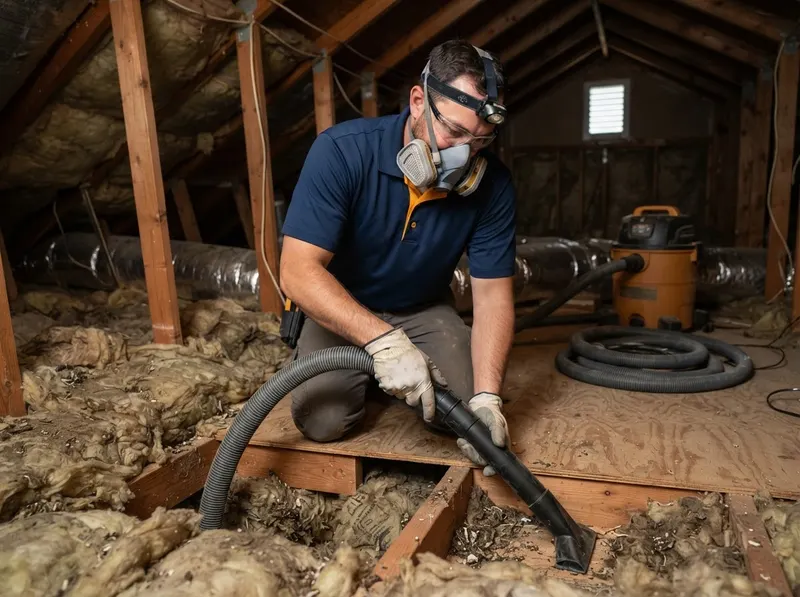
Thermal vacuum extraction machinery strips rodent-contaminated, urine-soaked blown fiberglass or cellulose insulation from residential attics via sealed exterior exhaust tubing. Following total bulk insulation extraction, technicians sweep attic joists and mist structural surfaces with specialized hospital-grade enzymatic biocides to neutralize airborne hantavirus, leptospirosis spores, and volatile organic odor compounds. The bio-remediation protocol finishes with the high-density pneumatic re-installation of Class-A fire-rated, borate-treated thermal cellulose insulation, which provides exceptional building thermal performance and natural insect repellency throughout sub-roof cavities.
Get a quote →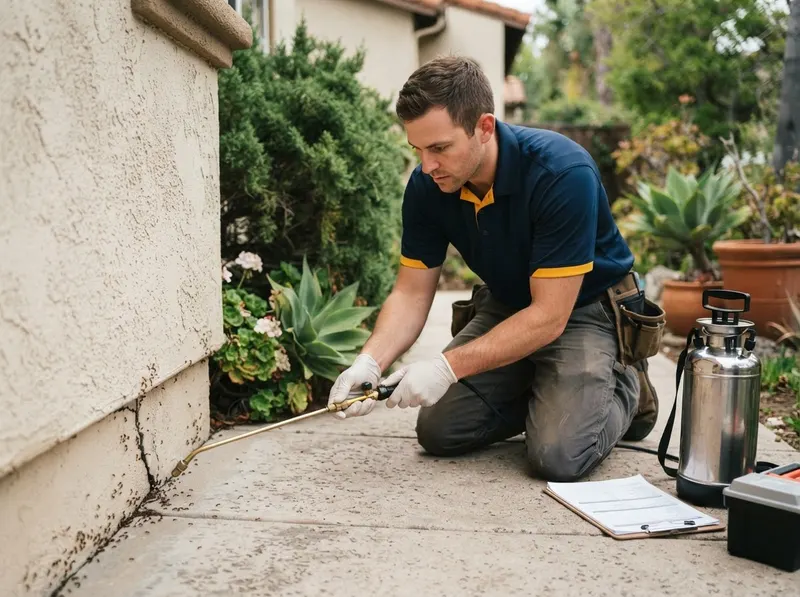
Argentine ant eradication eliminates resilient multi-queen supercolonies utilizing advanced non-repellent perimeter liquid barriers paired with slow-acting carbohydrate-protein micro-gel matrices. Because local Argentine ant colonies operate with multiple egg-laying queens across interconnected outdoor nests, standard repellent contact sprays trigger defensive nest splitting and interior dispersion. Technicians apply non-repellent compounds to structural foundation perimeters, garden soil borders, and irrigation valve boxes, enabling foraging worker ants to carry lethal active ingredients into subterranean brood chambers. This horizontal chemical transfer neutralizes the reproductive queens, collapsing the colony structure across residential yards and stopping interior kitchen trails.
Get a quote →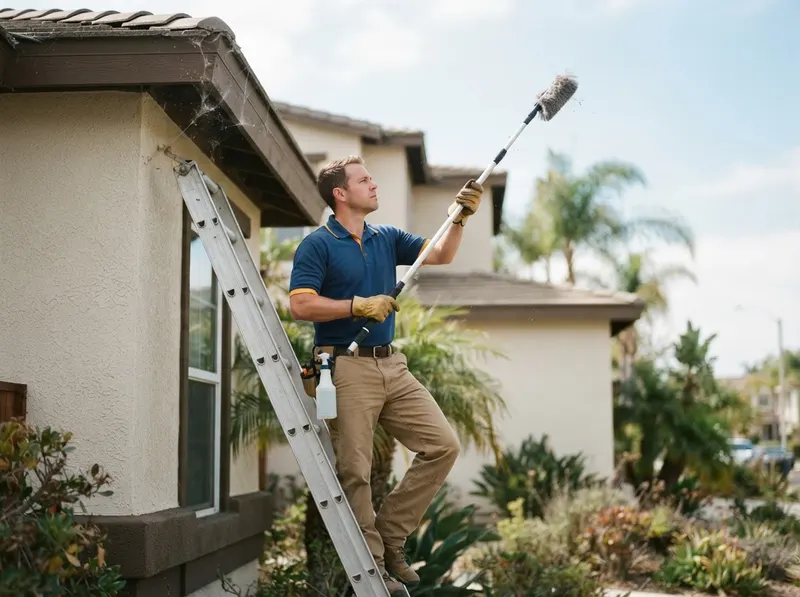
Exterior spider defense protocols physically clear dense black widow, brown widow, and common cobweb spider networks from structural eaves, window perimeters, exterior entry overhangs, deck supports, and exterior utility enclosures. Technicians utilize extendable carbon-fiber brushes treated with botanical pyrethrin dusts to break down silk webbing, destroy concealed egg sacs, and flush spiders out of hidden structural gaps. Concurrently, specialized microencapsulated barrier sprays are applied into exterior weep holes, mortar lines, and decorative siding joints, establishing a persistent residual perimeter that prevents new predatory spiders from re-anchoring hunting webs around outdoor living spaces.
Get a quote →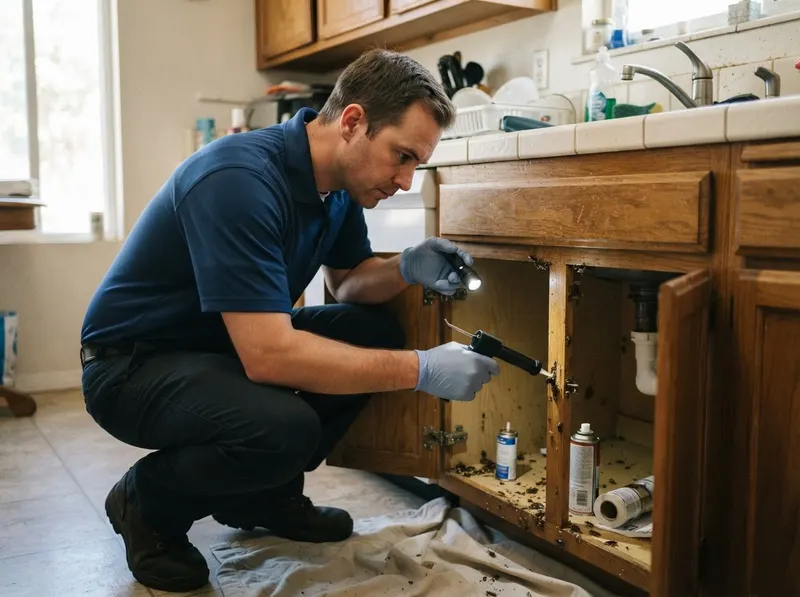
Targeted indoor German cockroach elimination relies on precision placements of insect growth regulators (IGRs) combined with non-repellent indoxacarb and abamectin gel formulations applied into critical structural voids. Technicians apply treatments directly behind kitchen cabinetry hinge points, inside electrical conduit boxes, within refrigerator motor housings, and along under-sink plumbing chases where moisture and warmth support cockroach aggregation. The dual-action treatment regime arrests biological nymph development, prevents adult egg capsule viable formation, and rapidly eradicates reproducing populations without broadcast chemical airborne spraying inside domestic food-preparation environments.
Get a quote →You get a firm, itemized quote for your pest control service before any work begins, no surprises, no pressure.
Careful prep, tidy work, and a full cleanup when we are done. We treat your home and belongings like our own.
The same trusted, background-checked team from the first call to the final check.
Executing a proper structural pest defense requires matching the specific pest biology and structural intrusion level against physical site access, structural materials, and chemical mobility. If home timbers exhibit hollow galleries, blistered exterior paint, and accumulation of hard, hexagonal fecal pellets, choose localized precision borate foam and termiticide injection directly into framing galleries; if widespread drywood termite colonies occupy inaccessible ceiling joists, sub-sheathing, and framing across an entire multi-story residence, whole-home structural fumigation remains the necessary defense. The practical trade-off is clear: localized injection targets active feeding chambers with zero structural downtime and no homeowner move-out, but it cannot access concealed nests trapped inside blind structural voids, whereas structural fumigation completely eradicates 100% of internal colonies throughout the framing envelope but demands a three-day property evacuation, food removal, and exterior perimeter security management.
If exterior foundation perimeters face massive multi-queen Argentine ant trails emerging from drought-stressed canyon soils in Mira Mesa or Clairemont, choose non-repellent liquid transfer agents paired with slow-acting micro-encapsulated dual-action carbohydrate baits; if a sudden kitchen or bathroom invasion requires instantaneous knockdown within living spaces, choose localized botanical pyrethrin perimeter flushes. The trade-off is behavioral: non-repellent systemic chemistry requires 7 to 14 days to circulate horizontally through the social supercolony to neutralize the reproductive queens permanently, whereas consumer contact sprays kill surface foraging workers within seconds but trigger an immediate biological survival response known as 'budding,' which causes the subterranean colony to splinter into four or five independent nests inside your drywall. If roof rats have breached attic spaces near Mission Valley or canyon edges in North Park, choose complete 100% mechanical hardware exclusion using 23-gauge galvanized steel wire mesh combined with interior mechanical snap traps; if outdoor brown rats are actively burrowing into yard landscaping or around exterior trash pads, choose heavy tamper-resistant exterior rodent bait stations secured to foundation anchor points.
The trade-off involves upfront expenditure: mechanical structural exclusion requires detailed manual labor to seal every roofline junction, fascia void, and plumbing entry point to keep rodents out forever, whereas ongoing exterior baiting programs manage surrounding population density outside the home without resolving structural vulnerabilities in the roofline.
Every project gets a firm, written price after a free on-site visit. Ranges below for orientation.
Tell us about your pest control service job and we'll send a clear, written quote, usually the same day. Or just call and talk to a real San Diego pro.
(858) 384-3002
San Diego County encompasses distinct microclimatic environments that shift rapidly from damp marine layer humidity in Ocean Beach and Pacific Beach to dry thermal chaparral canyon zones in Rancho Bernardo and Mira Mesa. Historic timber-framed Spanish bungalows and mid-century post-and-beam homes in North Park, Hillcrest, and Point Loma are exposed to high concentrations of drywood termites that swarm from coastal canyon reserves such as Cabrillo National Monument and Torrey Pines State Natural Reserve between March and May. Meanwhile, the rich alluvial and sandstone soil shelves throughout Mission Valley, Clairemont, and areas surrounding Balboa Park support extensive subterranean termite networks that travel via concrete slab stress fractures and underground utility channels. Furthermore, steep natural riparian canyons create expansive structural transit corridors where local roof rats, raccoons, and field mice move from natural scrub habitats straight into residential roofing canopies, utility service wires, and attic crawlspaces, requiring localized perimeter exclusion engineering rather than standard surface spray tactics.
Free estimates for San Diego & the surrounding area.
 PestPilot Pest Control