Attic voids across San Diego County present distinct environmental liabilities due to regional architecture and coastal wildlife patterns. Roof rats (*Rattus rattus*) exploit mature eucalyptus branches and Spanish clay…
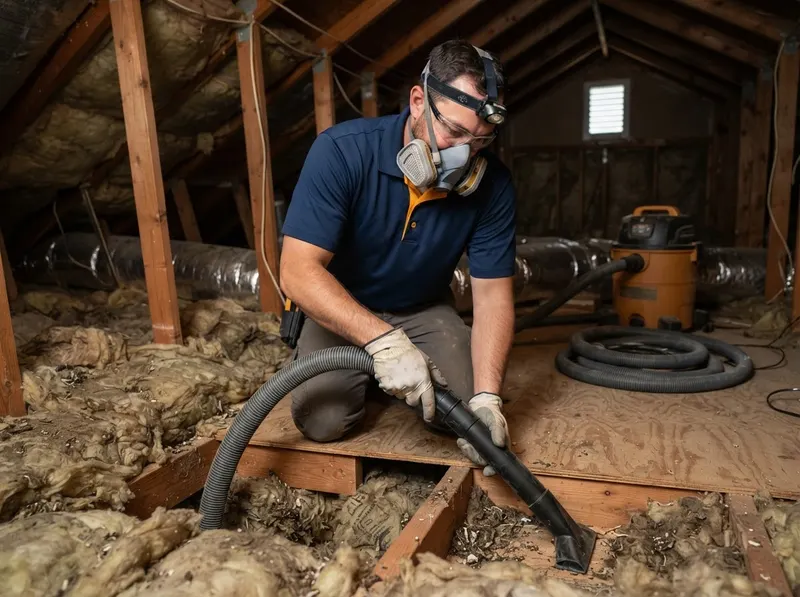
Attic voids across San Diego County present distinct environmental liabilities due to regional architecture and coastal wildlife patterns. Roof rats (*Rattus rattus*) exploit mature eucalyptus branches and Spanish clay tile gaps common in neighborhoods like La Jolla, Point Loma, and Mission Valley. Once established, these rodents deposit calcified droppings, pheromone trails, and urine that penetrate porous joists and subflooring. Rodent bioclean protocols deploy commercial vacuum machinery fitted with certified HEPA filtration systems to extract fecal particulate down to 0.3 microns without discharging biological hazards into indoor living areas. Antimicrobial misting neutralizes zoonotic pathogens including leptospirosis and hantavirus variants, neutralizing biological scent markers that attract future colonies across canyons near Clairemont and Mira Mesa.
The structural choice between targeted sanitation and comprehensive insulation extraction depends on contaminant density. If rodent activity is confined to a single runway near an exterior louvered vent in North Park, localized vacuuming and surface misting maintain structural containment without disturbing intact thermal barriers. When urine saturation exceeds 20% of the surface area, frequent in damp maritime zones like Ocean Beach and Pacific Beach, compressed fiberglass loses structural R-value and holds moisture against drywall ceilings. In these conditions, technicians extract all existing thermal layers, mist hospital-grade virucides along top plates, and seal access bypasses using heavy-gauge wire mesh and mortar prior to installing fresh blown-in borate-treated cellulose or fiberglass batt material.
Structural exclusion remains central to the protocol. Eradication without structural closure leaves attic cavities vulnerable through dormer junctions, fascia gaps, and uncapped utility sweeps. The process follows four objective stages: first, technicians secure structural containment by sealing interior attic hatch access with plastic sheeting; second, insulation and physical nests are extracted under negative pressure directly to sealed exterior transport bins; third, structural timbers receive non-staining botanical or enzyme disinfectants that cure within two hours; fourth, technicians seal exterior gaps larger than one-quarter inch using 19-gauge galvanized hardware cloth, expanding elastomeric foam, and stainless steel escutcheon plates across complex roof pitches found in Hillcrest and Rancho Bernardo homes.
Every job gets a firm, written price after a free on-site visit.
Tell us about your rodent bioclean and attic insulation decontamination job in San Diego and we'll send a clear, written quote, usually the same day.
 PestPilot Pest Control