Commercial culinary kitchen biosecurity management is distinct from routine surface spraying. High-heat dishwashing lines, sub-counter grease accumulation, and constant moisture create localized microclimates where…
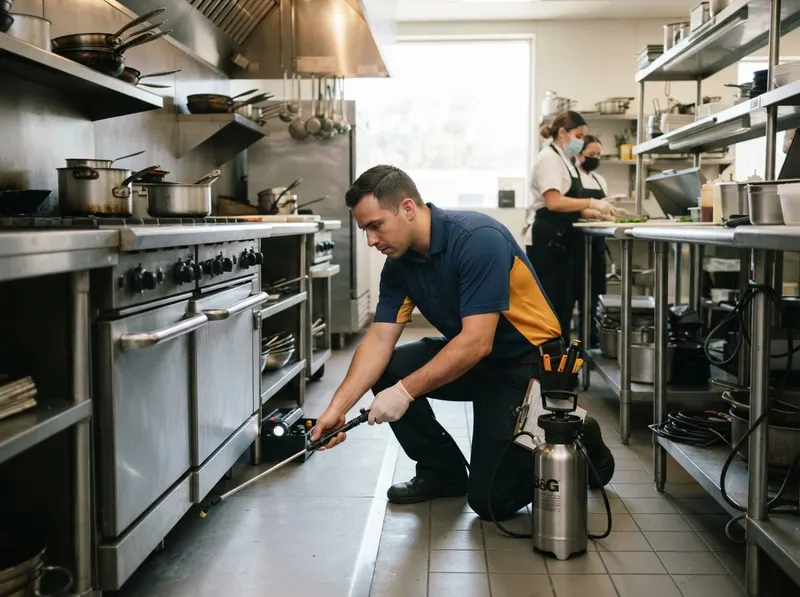
Commercial culinary kitchen biosecurity management is distinct from routine surface spraying. High-heat dishwashing lines, sub-counter grease accumulation, and constant moisture create localized microclimates where Blattella germanica (German cockroaches) and Phorid flies reproduce undetected behind stainless steel cladding. A baseline chemical spray applied to baseboards fails because ambient grease and hot-water washdowns degrade standard pyrethroid compounds within 48 to 72 hours. Precision kitchen biosecurity deploys non-repellent transfer actives, micro-encapsulated growth regulators, and aggressive structural sealing. This targeted defense system stops pathogen vectors from contaminating prep surfaces, protecting commercial operators against County of San Diego Department of Environmental Health and Quality violations.
Operational fit dictates specific intervention tiers. If a facility shows localized perimeter activity around prep sinks, non-corrosive localized baiting matrices and silicone boundary sealing solve the breach without downtime. If an operation experiences persistent drain-line fly populations or rodent incursions around motor compressors in walk-in refrigeration units, the protocol shifts to complete bio-enzymatic digestion of subterranean organic matter paired with 16-gauge mesh exclusion around conduit pass-throughs. The operational trade-off requires complete post-application kitchen washdown protocols by line staff versus ongoing risk of regulatory closure. Standalone dining operations in downtown Gaslamp, craft breweries in North Park, and coastal seafood hubs across Point Loma and Pacific Beach present distinct structural vulnerabilities based on historic slab construction, exterior alley dumpsters, and marine layer moisture.
Facility protection follows a strict 4-step sequence: Step 1 is an unannounced or after-hours audit mapping void areas, junction boxes, and floor drains. Step 2 applies bio-enzymatic foam into grease traps and drainage channels to consume the breeding substrate. Step 3 installs non-chemical attractant light stations and targeted non-volatile matrix gel in structural cracks, keeping treatments completely separated from food contact surfaces. Step 4 seals sub-millimeter drywall gaps, floor-sink junctions, and motor housings using high-heat industrial compounds.
Every job gets a firm, written price after a free on-site visit.
Tell us about your commercial culinary kitchen biosecurity management job in San Diego and we'll send a clear, written quote, usually the same day.
 PestPilot Pest Control